Introduction
The politics of Tamil Nadu is passing through a transitional stage as the new voices and new leadership start to take shape in shaping the future. Tamilaga Vettri Kazhagam (TVK) is among the new political movements that have attracted a lot of attention. As the 2026 elections are on the horizon, lots of voters are looking to find alternatives that offer change, development, and transparency.
Thank you for reading this post, don't forget to subscribe!What is TVK?
The Tamilaga Vettri Kazhagam (TVK) is a political movement that was founded on the idea of providing progressive governance and people-centric policies to Tamil Nadu. The party headed by popular actor and a public figure Vijay has the aim of bridging the gap between what the people expect and political performance.
Why TVK is Gaining Popularity
1. Strong Youth Connection
The relationship with young voters is one of the largest advantages of TVK. Tamil Nadu is a state with a high youth population, and a good number of them are disengaged with the traditional political systems. TVK fills this void by:
- Promoting education and employment
- Encouraging entrepreneurship
- Supporting digital innovation
The party’s modern approach makes it highly relatable to first-time voters.
2.Leadership Appeal
A political movement cannot do without leadership. Vijay comes with a powerful personal brand, discipline and mass appeal. His shift to politics out of cinema is an indication of wanting to do something valuable to the society other than entertainment.
His leadership style is often associated with:
- Integrity
- Social responsibility
- Direct communication with people
3.Focus on Development
TVK emphasizes development across all sectors, including:
- Infrastructure growth
- Healthcare improvement
- Education reforms
- Job creation
The party promotes sustainable development that benefits both urban and rural areas.
4. Transparency and Clean Politics
Many voters today demand transparency and accountability. TVK promotes:
- Corruption-free governance
- Open communication
- People-first decision-making
This approach appeals to citizens who are tired of traditional political controversies.
Why Voting Matters in 2026
Voting is not just a right—it is a responsibility. The 2026 election is an opportunity for citizens to:
- Choose a new direction
- Support policies that matter
- Strengthen democracy
By voting for a party like TVK, citizens can actively participate in shaping Tamil Nadu’s future.
Prompt :
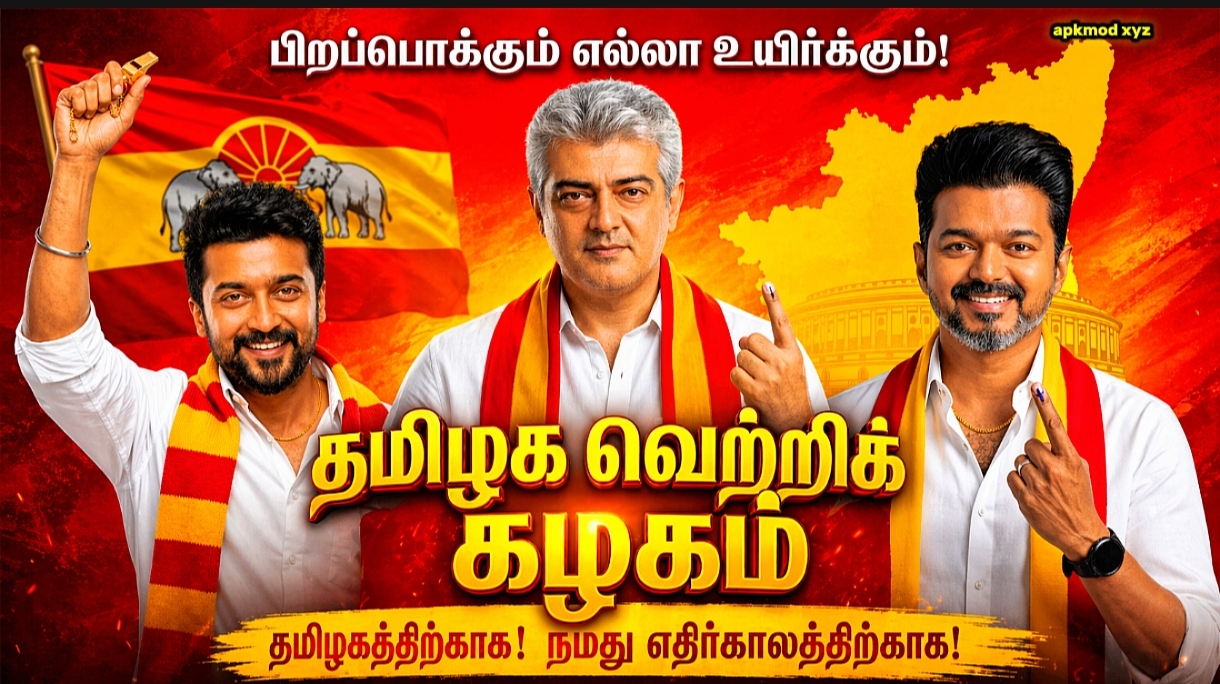
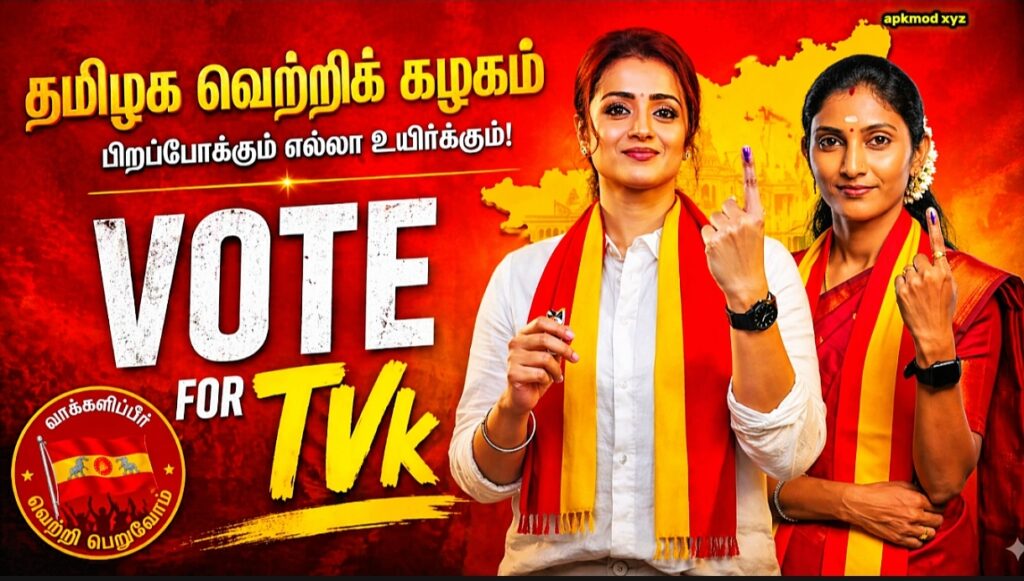
Create a 16K ultra-realistic cinematic portrait of a South Asian male/female using the uploaded image as face reference. Face must be 100% identical (no changes). Pose: torso slightly turned (10–15°), looking at the camera with confidence. Right hand raised, index finger pointing up with voting ink mark. Outfit: white shirt (open collar), black pants, red-yellow-red scarf, gold chain, ring, black smartwatch (left), silver bracelet (right). Background: red to yellow gradient, Tamil Nadu map in yellow, subtle government building illustration. Add top text in bold gold Tamil font: “தமிழக வெற்றிக் கழகம்” & “பிறப்போக்கும் எல்லா உயிர்க்கும்!”. Studio lighting, sharp focus, cinematic color grading, 9:16 portrait.
The Role of Youth in 2026 Elections
Young voters will play a decisive role in the upcoming elections. Their priorities include:
- Jobs and career growth
- Quality education
- Corruption-free governance
TVK’s policies align closely with these expectations, making it a strong contender among youth voters.
Is TVK the Future of Tamil Nadu Politics?
While it is too early to predict election outcomes, TVK has clearly positioned itself as a strong alternative in Tamil Nadu politics. Its focus on:
- Development
- Transparency
- Youth empowerment
makes it a party worth considering in 2026.
Conclusion
The 2026 elections in Tamil Nadu is a breakthrough. It is up to the voters to choose between the traditional politics or accept a new vision.
Voting for TVK could mean:
- Supporting fresh leadership
- Encouraging transparent governance
- Creating a Tamil Nadu that is progressive.
Finally, the decision is up to the people. An informed choice has the potential to define the future of the state in the long run.