
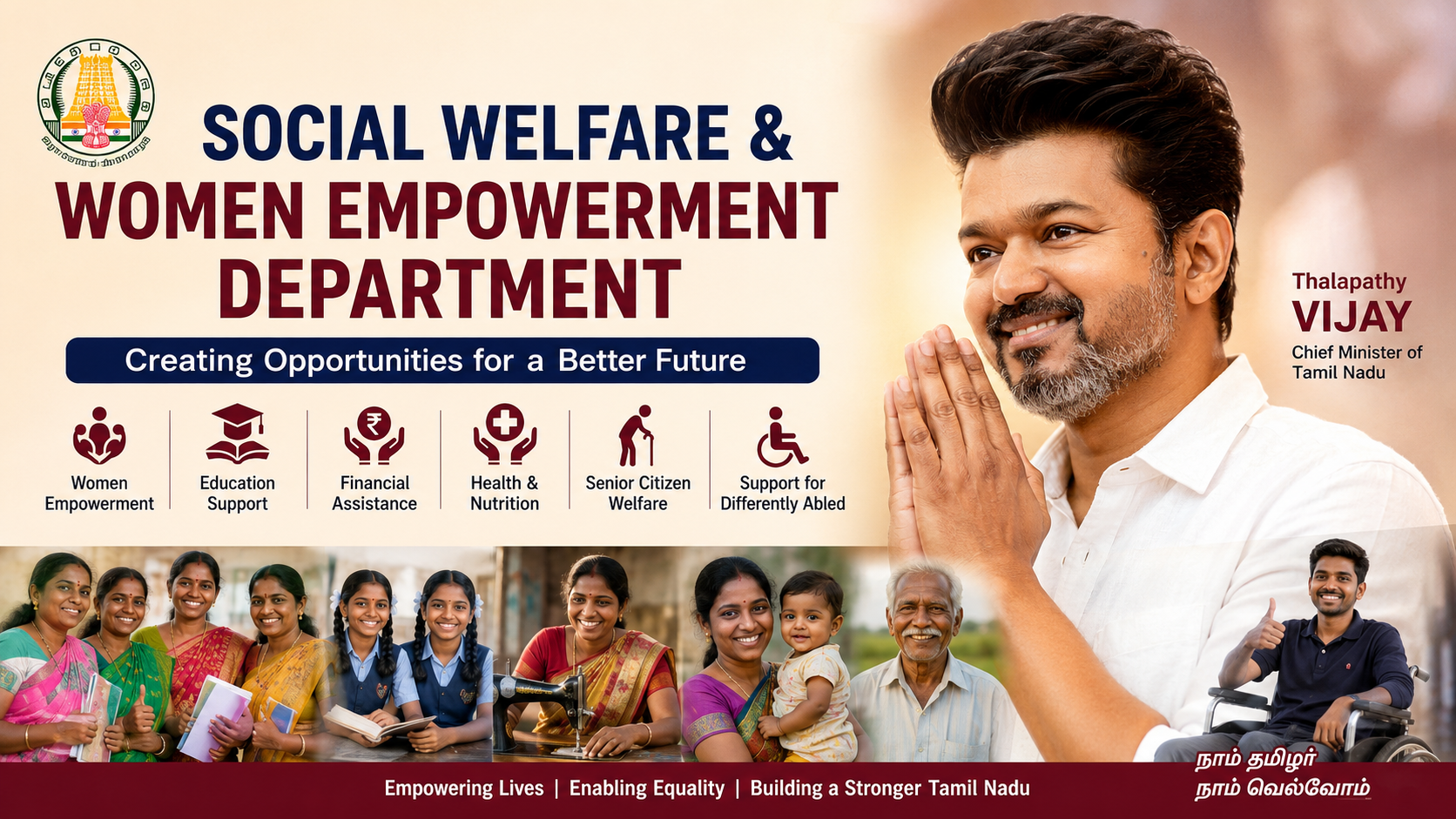
The Social Welfare & Women Empowerment Department is a key department that contributes to the enhancement of women’s life, children’s life, senior citizens, persons with disabilities and social disadvantaged. The department strives to provide equal opportunities, financial assistance, education, safety and economic independence. It strives to create an inclusive society through welfare schemes and development programmes to ensure access for all to basic services, living with dignity.
Thank you for reading this post, don't forget to subscribe!The department works on the empowerment of women through education, employment, entrepreneurship, health and social security. It also provides financial assistance, scholarships, nutrition programs, rehabilitation services and awareness campaigns to vulnerable families. The department plays a role in promoting social justice and sustainable development with an efficient implementation of the government welfare policies.
Objectives of the Social Welfare & Women Empowerment Department
The main focus of the department is to make contribution in improving the quality of life for the vulnerable sections of society. It aims to eradicate discrimination and advance gender equality and social and economic development. The department collaborates with government departments, education providers, health and medical authorities and community groups to ensure welfare benefits are made available to those who qualify for them.
Another important goal is to increase women’s participation in education, employment, leadership, and entrepreneurship. By providing financial assistance, skill development programmes, and legal protection, the department encourages women to become self-reliant and actively contribute to society.
Importance of Women Empowerment
Women empowerment is one of the best pillars of a nation’s development. Educated and economically empowered women play an important role in the family welfare, child education, health and community development. The department strives to support women in education, vocational training, entrepreneurship and leadership development in an effort to promote equal opportunities.
Empowering women also reduces poverty, improves literacy rates, strengthens family income, and promotes healthier communities. Through awareness programmes, legal assistance, and financial support, women gain confidence to participate in decision-making and build successful careers or businesses.
Major Welfare Schemes
The department implements several welfare schemes that address different social and economic challenges. These schemes provide financial assistance, educational support, healthcare benefits, rehabilitation services, and livelihood opportunities.
Many schemes focus on supporting economically weaker families by offering scholarships, marriage assistance, maternity benefits, nutrition support, pensions, and housing assistance. These programmes ensure that deserving beneficiaries receive timely government support for improving their quality of life.
Educational Support Programmes
Education remains one of the most powerful tools for social transformation. The department offers scholarships, hostel facilities, free educational materials, and financial assistance to students from disadvantaged backgrounds.
Girls are encouraged to continue higher education through various scholarship schemes that reduce financial barriers. Special incentives help improve school enrolment, reduce dropout rates, and promote higher education among women and socially weaker communities.
Educational assistance also includes coaching programmes, career guidance, skill development courses, and digital learning opportunities that prepare students for employment and competitive examinations.
Financial Assistance for Women
Financial independence plays an important role in women’s empowerment. The department provides financial assistance through grants, subsidies, self-help group support, and entrepreneurship schemes.
Women can benefit from low-interest loans, business development programmes, vocational training, and marketing support. These initiatives encourage women to start small businesses, participate in self-employment activities, and improve household income.
Many women also receive financial aid during marriage, maternity, widowhood, and other critical life situations through government welfare programmes.
Self-Help Groups and Entrepreneurship
Self-Help Groups (SHGs) have transformed the lives of millions of women by encouraging savings, credit access, and entrepreneurship. The department supports SHGs through financial assistance, capacity-building programmes, skill development, and business guidance.
Women involved in SHGs often establish enterprises such as tailoring units, food processing businesses, handicrafts, dairy farming, poultry farming, organic farming, and retail shops. These income-generating activities improve financial stability while promoting community development.
Entrepreneurship training programmes also teach business planning, digital marketing, financial management, and customer service, helping women build sustainable businesses.
Skill Development and Employment
Skill development programmes prepare women and youth for modern employment opportunities. The department organises vocational training in computer applications, tailoring, beauty and wellness, healthcare, hospitality, retail, handicrafts, food processing, and digital technologies.
Training centres provide practical knowledge, certification, and placement support. These initiatives help participants secure employment in both public and private sectors or establish self-employment ventures.
Continuous skill enhancement enables beneficiaries to remain competitive in an evolving job market while improving their earning potential.
Child Welfare Services
Children represent the future of every nation, and their development remains a major priority. The department implements programmes that focus on child nutrition, healthcare, education, protection, and rehabilitation.
Special attention is given to orphaned children, children with disabilities, and those from economically weaker families. Nutrition programmes improve child health, while educational support encourages school attendance and academic achievement.
Child protection services also work to prevent abuse, exploitation, child labour, and trafficking through awareness campaigns and rehabilitation programmes.
Nutrition and Health Initiatives
Proper nutrition and healthcare are essential for healthy families and communities. The department supports nutrition programmes for pregnant women, lactating mothers, infants, and children.
Health awareness campaigns educate citizens about maternal health, child nutrition, sanitation, immunisation, menstrual hygiene, mental health, and preventive healthcare. Medical camps and health screening programmes improve access to healthcare services in rural and urban areas.
Nutrition support significantly contributes to reducing malnutrition, improving maternal health, and promoting healthy childhood development.
Support for Senior Citizens
Senior citizens deserve dignity, care, and financial security. The department offers pension schemes, healthcare support, rehabilitation services, and welfare programmes for elderly individuals.
Old-age homes, healthcare initiatives, recreational activities, and counselling services improve the quality of life for senior citizens. Awareness programmes also encourage families to provide proper care and respect to elderly members.
Financial assistance ensures that economically vulnerable senior citizens can meet their daily needs with greater independence.
Welfare for Persons with Disabilities
The department works to create an inclusive society where persons with disabilities receive equal opportunities in education, employment, healthcare, and public services.
Various schemes provide assistive devices, scholarships, rehabilitation support, vocational training, and employment opportunities. Accessibility improvements in public institutions help persons with disabilities participate fully in social and economic activities.
Inclusive education and skill development programmes encourage independence while reducing social barriers.
Legal Protection and Women’s Safety
Women’s safety remains a major priority under the department’s initiatives. Legal awareness programmes educate women about their rights related to domestic violence, workplace harassment, property ownership, child protection, and gender equality.
Support services include counselling, legal aid, shelter homes, emergency assistance, and rehabilitation for victims of violence. Awareness campaigns encourage reporting of crimes while promoting respect and equality within society.
Strong legal protection creates safer communities where women can pursue education, employment, and entrepreneurship without fear.
Digital Services and Online Applications
Digital transformation has simplified access to government welfare services. Citizens can now obtain information about welfare schemes, eligibility criteria, required documents, and application procedures through online platforms.
Digital services improve transparency, reduce paperwork, speed up processing, and make government services more accessible. Beneficiaries can track applications, receive notifications, and access welfare information from their homes.
The use of digital technology ensures faster service delivery while increasing public awareness about available welfare programmes.
Community Development and Social Awareness
Community participation is essential for the success of welfare programmes. The department organises awareness campaigns, training workshops, educational seminars, and community outreach activities.
These programmes educate citizens about gender equality, education, healthcare, nutrition, sanitation, financial literacy, child rights, environmental protection, and social responsibility.
Community engagement strengthens local participation and encourages collective efforts toward sustainable social development.
Challenges and Future Opportunities
Although significant progress has been made, several challenges remain. Limited awareness, financial constraints, social discrimination, digital literacy gaps, and geographical barriers sometimes prevent eligible beneficiaries from accessing government schemes.
Future initiatives will likely focus on expanding digital services, improving outreach in rural areas, increasing employment opportunities, strengthening entrepreneurship programmes, and promoting financial inclusion for women and disadvantaged communities.
Greater collaboration between government departments, educational institutions, financial organisations, and community groups can further enhance the effectiveness of welfare programmes.
How Citizens Can Benefit
Citizens should regularly check eligibility for welfare schemes and keep essential documents updated. Participating in awareness programmes, skill development courses, and self-help groups can open new opportunities for education, employment, and entrepreneurship.
Applicants should carefully follow application guidelines, submit accurate information, and monitor the status of their applications. Staying informed about newly introduced schemes ensures that eligible individuals receive timely benefits.
By actively participating in government welfare programmes, families can improve their financial stability, educational opportunities, healthcare access, and overall quality of life.
Apply Link
Conclusion
The Social Welfare & Women Empowerment Department is a bedrock of inclusive development by encouraging equality, dignity and opportunity for every individual. The department is still making a difference in the lives of many through scholarships, financial aid, health programmes, skill-building, support for entrepreneurs, child care, programs for the elderly, disability programs, and women’s safety programs.
Its efforts to empower women and help vulnerable groups build a stronger family, healthier societies, and sustainable economic growth. The department will continue to be a key player in shaping a future that is more inclusive, equitable, and prosperous for all as welfare programmes undergo development and digital innovation and service delivery continually improves.

